
Arnold Previous Residents Sources
Arnold previous residents are best reconstructed from a dated series, not a single name hit. The current Jefferson County record for an Arnold property gives an address, tax owner, parcel number, and legal description. The Recorder's grantor and grantee indexes move that Arnold ownership trail backward. Directories, newspapers, census schedules, permits, and local collections then help answer the different question of who occupied or knew the address. Use the source nearest to the Arnold era in question, and write down the date attached to every result.
| Source route | Era described | Where to reach it | What it can add |
|---|---|---|---|
| COTT land records | March 1985 back to 1817, per county FAQ | Online subscription | Historical grantor/grantee entries and land records |
| Laredo | April 1985 to present | Online subscription with agreement | Later land-record index and documents under plan terms |
| Recorder vault | Computerized index and historic books | Hillsboro Recorder counter | Grantor, grantee, book, page, and copy path |
| JCL newspapers and NIDB | Title-specific historical and later runs | Library index, microfilm, and databases | Moves, deaths, probate, and family context |
| Federal census | Public through 1950 | NARA and library research services | Household composition at the census date |
| Arnold permits and maps | Current system; earlier years not confirmed | City records, MyGov, and map collections | Project dates, building use, and address context |
The county has not posted a confirmed Arnold directory run, a proven Arnold Sanborn year list, or an online start year for Arnold city permits. Those Arnold gaps matter. Ask the custodian or library for the specific volume, sheet, file, or address range rather than filling a missing Arnold era with a guess.
Arnold Previous Residents Begin Here
The Jefferson County Property Tax Inquiry / DEVNET is the first Arnold address anchor. Search an Arnold parcel by address, parcel number, owner, street, city, ZIP, or a house-number range. The physical or situs address and the owner mailing address are separate fields. Record both without treating either as a list of all Arnold occupants. Save the parcel number, legal description, subdivision or lot, value and tax-district details, plus any book, page, or document reference shown.
An Arnold legal description is the land identifier used in a deed, such as a lot and block or township, range, and section language. It can survive a changed Arnold street label more reliably than a modern house number. DEVNET's Search All Tax Years option may reveal a prior tax entry, but it is not a complete Arnold title chain. For the current street-wide record trail, the Arnold street directory has the address-focused approach.
Note: A tax owner and a mailing address can establish a property connection, but they do not prove the complete household at that address.
Arnold Previous Residents Deed Chain
The Jefferson County Recorder's method for an Arnold property runs backward from today's owner. A grantee is the buyer. A grantor is the seller. Search the current owner of the Arnold property as grantee near the known purchase year, use the index reference to retrieve the deed, and transcribe the seller and legal description exactly. Then search that seller as grantee in an earlier Arnold transaction. Repeat the sequence, keeping spouses, trusts, estates, LLCs, initials, and spelling variants in the notes.
- Capture the parcel and current tax owner from DEVNET, including the legal description and any document reference.
- Search the current owner as grantee in the Recorder index and open the purchase deed through the available service or vault.
- Copy the grantor, recording date, book and page or document number, legal description, and any prior-instrument reference.
- Search that grantor as a prior grantee, then repeat with each earlier transfer.
- Use a recorded plat to connect old lot and block wording to the address. For older metes-and-bounds language, retain the township, range, and section terms.
- Grantor and grantee
- The grantor transfers an interest; the grantee receives it. In a purchase deed, they are commonly seller and buyer.
- Chain of title
- The ordered sequence of recorded transfers that links one ownership interest to an earlier one.
- Legal description
- The deed's formal land description. It is more durable than a mailing address for historic searching.
Deeds of trust and releases affecting an Arnold property describe financing, not a transfer by themselves. A quitclaim may add or remove a party without a market sale, and a beneficiary deed can point to a later estate transfer tied to Arnold property. The Recorder can provide in-person copies for $2 for the first page, $1 for each additional page, and $1 to certify; phone or card orders add a $1 convenience fee and postage.
Arnold Previous Residents by Era
The online split is important for an Arnold address history. County guidance describes Laredo as covering April 1985 to the present, while COTT RECORDhub's historical route is described as March 1985 back to 1817. Both are subscription paths, not a single free public database. The county Recorder FAQ also describes a public computerized grantor/grantee index in the vault. When the online route is paid, unavailable, or ends, use the vault and historic books rather than assuming the record disappeared.
The COTT RECORDhub entry point is the county-designated historical online route. Its landing screen is a useful reminder to confirm access terms and the exact indexed name before beginning an Arnold previous residents search.
The month boundary should be checked with the Recorder for a particular transaction. Do not turn the April and March handoff into a claim that one month is absent. The Recorder's Hillsboro counter, phone copy service, and historic index are the documented fallback channels.
Date an Arnold House Carefully
Building evidence can date a structure or an alteration without naming every past resident. Arnold's Community Development materials link applications and fee information through MyGov. If an address cannot be browsed publicly, request existing permit records by address and ask for the application date, project type, applicant or contractor, inspection, and completion information that is releasable. A permit is a project record, not a household roster. The county GIS is useful for parcel context, but tax maps and aerials are not surveys.
The Library of Congress Sanborn search instructions provide a second way to test a building's footprint or use. The instructions explain that digitization varies and that some sheets from 1923 to 1930 remain restricted.
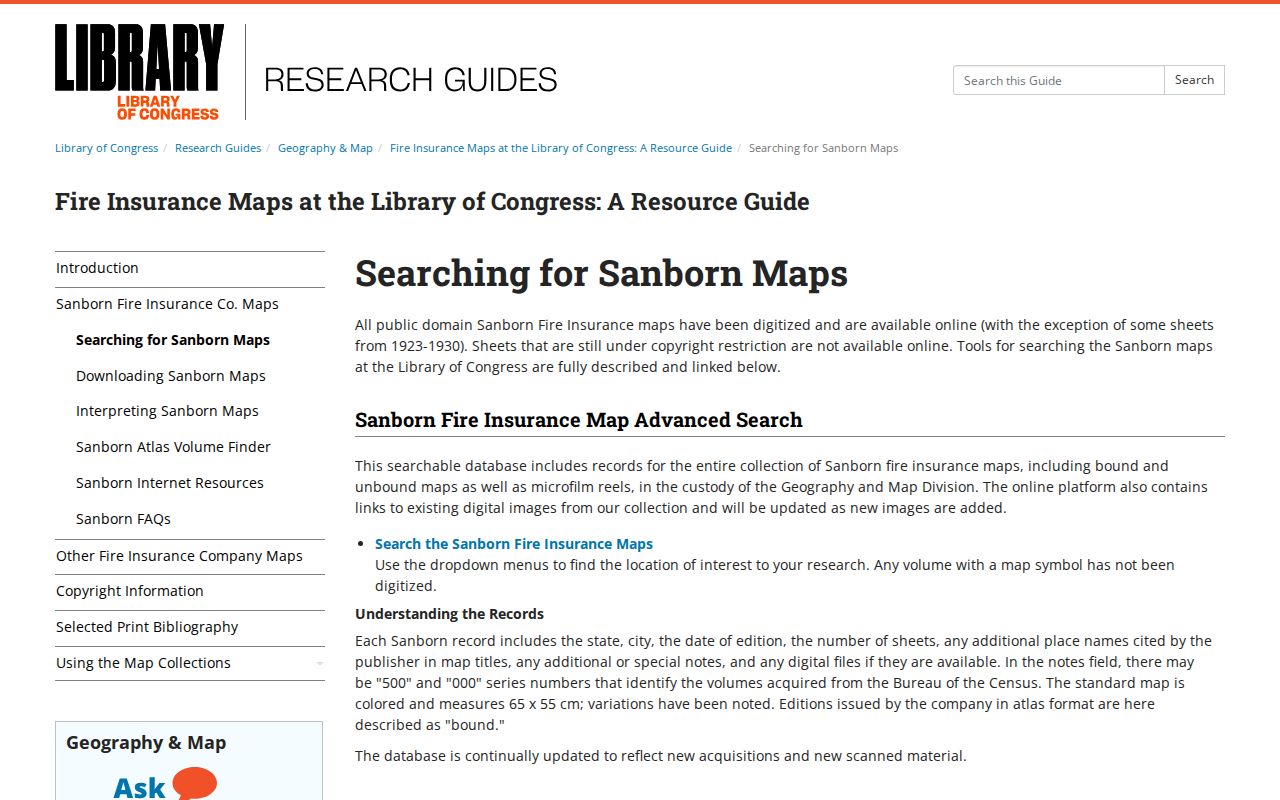
No confirmed Sanborn years for Arnold were found. Search by Missouri and city, then pair an available map year with the nearest directory or census and a permit or deed. A map can show a structure's context, but it cannot identify who lived there.
Arnold Previous Residents Households
Ownership is only one layer. A reverse or criss-cross directory is arranged by address and can bridge an address to an occupant's name. An ordinary city directory is usually alphabetical and may include a name, initials, spouse notation, occupation, address, owner or occupant mark, and abbreviation key. Jefferson County Library has not published a verified Arnold directory or reverse-directory run, so ask its genealogy staff and Northwest Branch Special Collection to search for Arnold, Jefferson County, Old Town Arnold, Imperial, Fenton, and St. Louis-area address directories. No actual online Arnold directory entry or sample entry was opened, so record the printed line and its volume details directly from any located source.
Jefferson County Library genealogy resources bring together the Della Lang rooms, local material, and research databases. The library's NIDB indexes selected births, deaths, marriages, probate, divorce, and genealogy items in local newspapers, but many social, school, and political articles are not indexed. A negative index result means the selected category did not produce a hit, not that no article exists.

Pair a directory year with the nearest released federal census year, then compare a deed, obituary, probate docket, or newspaper notice when a name disappears. Census schedules are public through 1950 under the 72-year release rule. For collection detail rather than the address trail, use the Arnold city directory.
Arnold Previous Residents Place Names
Arnold incorporated on September 14, 1972 after Beck, Flamm City, Maxville, Old Town Arnold, Ten Brook, and Wickes were brought into the city. Older records can therefore use one of those settlement names, a township, or Jefferson County instead of Arnold. Search each plausible place name alongside the current legal description. Do not rely on a supposed citywide street-renumbering date: no official source reviewed established one.
Jefferson County's records history offers a second reason to use multiple routes. County-seat and Jefferson City records were destroyed by fire, which left township lines disputed, but that event does not mean every deed was lost. The Recorder's modern index is described as reaching back to 1817. The Missouri Archives holds permanent state records and microfilmed local material; its county browser can be searched by office, record type, city, and year range, though not by a person's name.
Arnold Previous Residents Limits
Past residents cannot be inferred from a deed alone. A property owner may not have lived there, while another occupant or household member may never appear in the land record. Utility, delivery, DMV, protected-voter, Safe at Home, and sealed-record information are not an address-history shortcut. Obituaries and probate can close a historic trail: search the owner and spouse in NIDB and newspaper runs, review public probate material, and then verify the estate or beneficiary deed with the Recorder.
Lawful house-history use. Use Arnold previous residents research for family history, house history, and personal curiosity. Do not use it to track, harass, intimidate, or harm a living person.
For records held by a public body but not online, a targeted Missouri Sunshine Law request under RSMo Chapter 610 can ask for an existing open record, inspection, or a copy. It cannot require an office to create a resident list or disclose material that another law closes.