
Cataloging Arnold City Directory Collections
There is no verified, published shelf list for a complete Arnold city directory run. That matters. Jefferson County Library's public pages describe strong genealogy and special-collections resources, but they do not identify an Arnold publisher, a full sequence of years, a reverse-directory run, or a telephone-book shelf. The best starting point is therefore a collection map rather than a claimed directory chronology. It keeps a search grounded in sources that are actually documented and gives library staff useful terms when an unlisted volume must be located.
| Collection | Years or coverage | Where held | Access |
|---|---|---|---|
| JCL Newspaper Index Database | Exact start and end dates not posted | Northwest Branch Special Collection | Online name index, then staff help or microfilm for the article |
| JCL local newspapers | Documented titles range from 1866 to 1968; later sources vary | JCL databases and Northwest Branch microfilm | Library access, microfilm, and keyword searching |
| Missouri Digital Heritage directories | Title-specific digitized collections, not a verified Arnold run | Missouri Secretary of State portal | Free online collection search |
| JCL Special Collections | Local history, photographs, books, interviews, and microfilm | Northwest Branch | Catalog first, then public-use collection research |
| Jefferson County Historical Society catalog | 1800s to present descriptive holdings | Historical Society research center | Appointment research and digitization requests |
A city directory is only one kind of historical address evidence. Newspaper notices, cataloged photographs, probate references, and census schedules can narrow the same question when the hoped-for volume has not been confirmed. Note: Ask for a catalog search before assuming a missing online result means the collection has no local material.
Arnold Directory Runs Not Yet Verified
Research did not locate exact Arnold city-directory publishers or years in the official, text-accessible sources reviewed. It also did not confirm a local reverse or criss-cross sequence, a telephone-book run, or a live Arnold directory page. Those are genuine gaps, not evidence that no volume exists. Do not assign a well-known publisher or a date range to Arnold without opening the volume or receiving confirmation from the keeper. A reliable request to staff names Arnold, Jefferson County, Old Town Arnold, Imperial, Fenton, and St. Louis-area reverse directories, then asks which records are physically available.
Missouri Digital Heritage's city-directory collection is useful for learning how title-specific digitized directories can be searched by name, address, occupation, or date. Its availability does not establish an Arnold run. The same caution applies to national directory guides and to a nearby library's holdings. Keep the source, volume title, year, and page together in research notes so a later finding can be checked.
Arnold Directory Research at Della Lang
Jefferson County Library's Della Lang Local History and Genealogy Rooms are the practical local starting point. The Northwest Branch Special Collection combines microfilm with local-history books and articles, historical photographs, interviews, video, and a newspaper index. The published genealogy hours are Monday through Thursday from 9:00 a.m. to 8:00 p.m. and Friday through Saturday from 9:00 a.m. to 5:00 p.m. The library system is the right contact route for staff assistance, and the City of Arnold lists Jefferson County Library at 636-296-2204.
The Jefferson County Library genealogy page introduces the local-history program and its research databases.
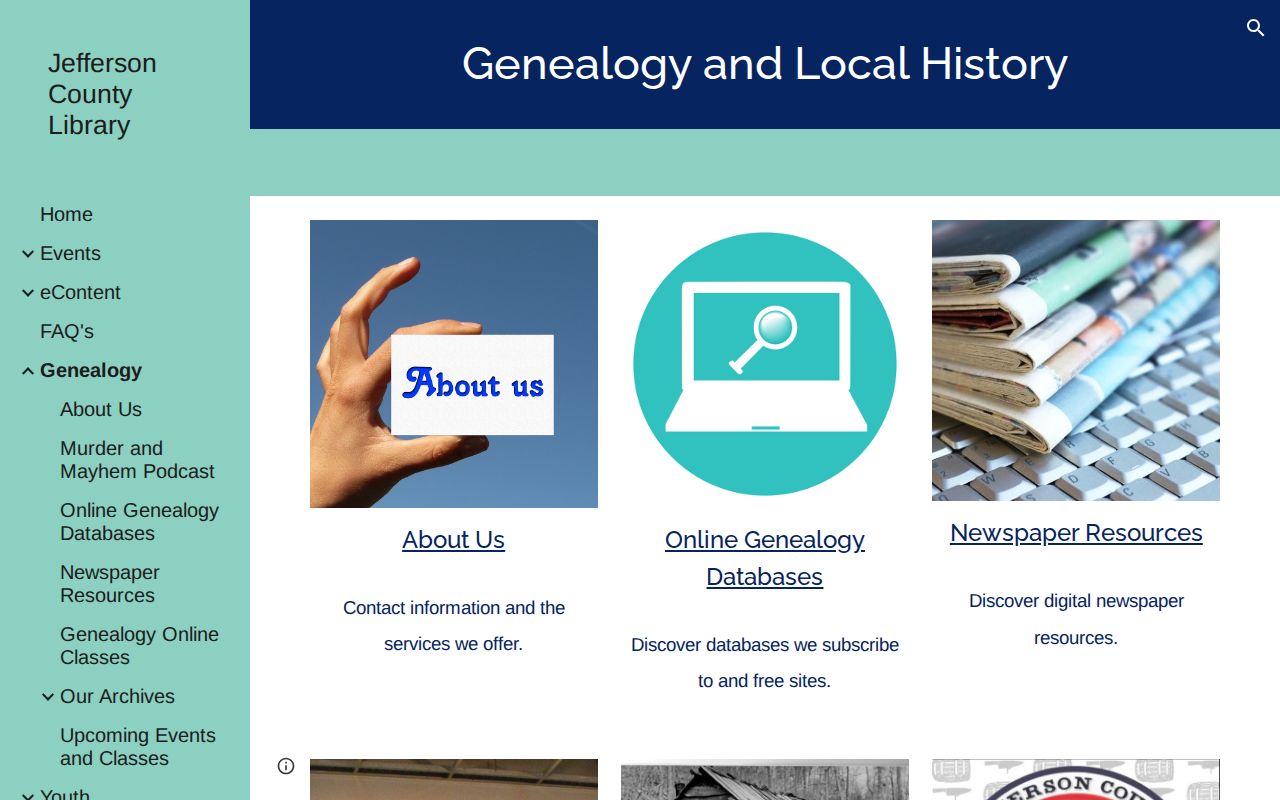
Della Lang's volunteer work helped shape the countywide library system, which helps explain why Arnold family material is concentrated in JCL collections rather than a separate city archive. The library offers Ancestry Library Edition in the library, Fold3, HeritageQuest, FamilySearch, Missouri Digital Heritage, and Missouri State Library resources. Some images or databases may require in-library use or a FamilySearch center.
Arnold Records in Newspaper Indexes
The JCL Newspaper Index Database is a useful lead before a shelf search. It indexes names of Jefferson County residents in local historical newspaper material and includes births, deaths, marriages, probate, divorce, and related genealogy items. It is not a complete index of each newspaper. Political, school-related, and many social-event articles are excluded, so a negative result means only that the name was not indexed within its selected categories. Follow a promising index hit to the underlying microfilm or full-text resource.
JCL Special Collections describes the microfilm, local-history articles, photographs, books, videos, and interviews available for this work.
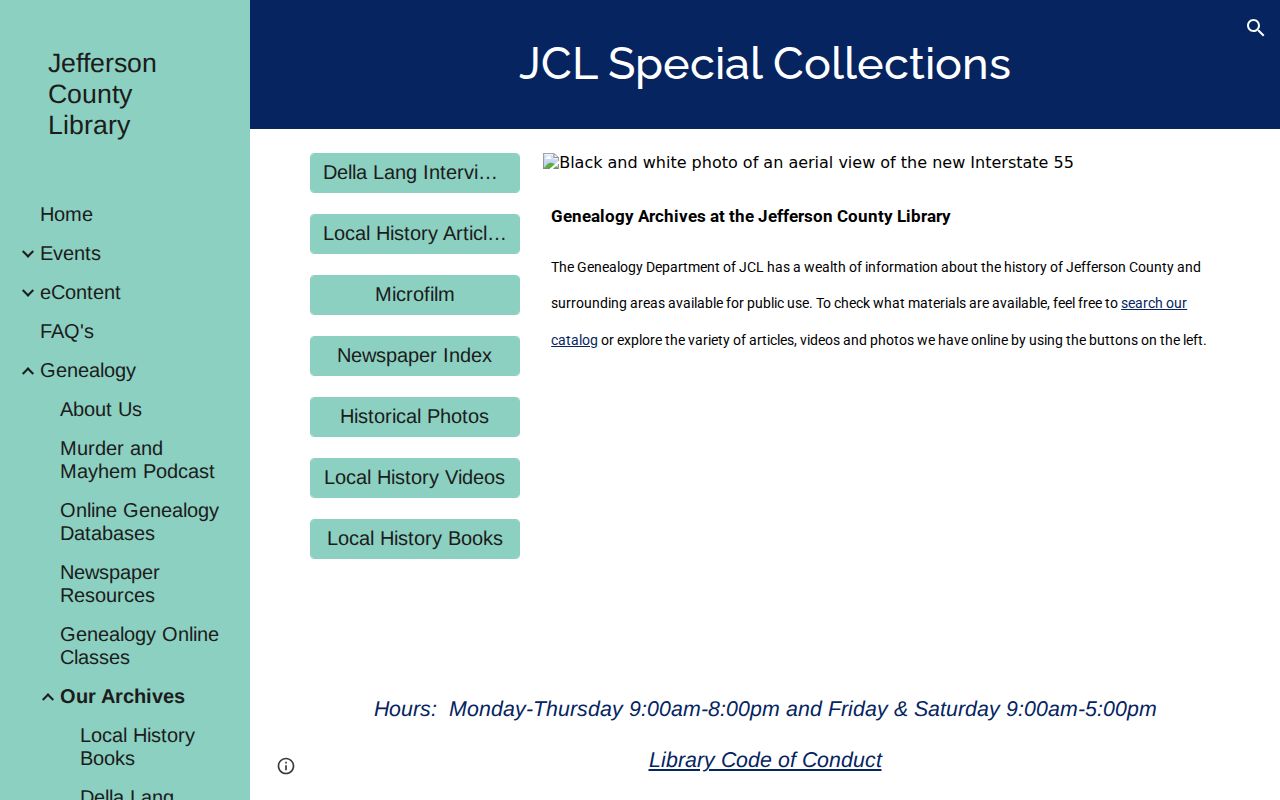
Documented newspaper runs include the Jefferson Democrat from 1866 to 1940, Jefferson Republic from 1898 to 1964, Jefferson County Record from 1909 to 1964, and Jefferson County Press-Times from 1918 to 1964. Post-Dispatch microfilm covers 1966 to 2002, while NewsBank provides St. Louis metro coverage from 1988 forward. These sources can supply moves, relationships, obituaries, and old place names that a directory entry alone may not show.
Interpreting an Arnold City Directory Entry
No actual Arnold directory entry was available for inspection in the research. The entry pattern below is therefore a reading inventory for a volume that has been located, not a reconstructed Arnold example. Many historical city directories list a surname and given name or initials, followed by a spouse reference, occupation or employer, street address, and sometimes an owner, renter, widow, or business notation. Copy the printed line exactly, including the spelling and abbreviations, before translating it into modern terms.
| Name | The surname, given name, or initials as printed, including cross-references. |
|---|---|
| Spouse reference | A parenthetical spouse name or a phrase such as “wife of,” when the volume uses one. |
| Occupation | An occupation and, in some volumes, an employer or business location. |
| Address | A house number and street, subject to the street names and numbering used that year. |
| Status marks | Any owner, renter, widow, deceased, or business mark only if the volume's key defines it. |
- Criss-cross directory
- An address-organized directory that begins with a street and house number, then identifies the listed occupant.
- Householder index
- A name index that identifies the household entry, sometimes separately from business listings.
- Abbreviation key
- The volume's explanation of shortened occupations, streets, and notations. Photograph or transcribe it before interpreting an entry.
Reverse and criss-cross formats can bridge an address to a listed person, but the exact local run remains unverified. For current address-keyed sources, use the Arnold street directory instead of treating a historical listing as proof of present residence.
Arnold Records in Archive Catalogs
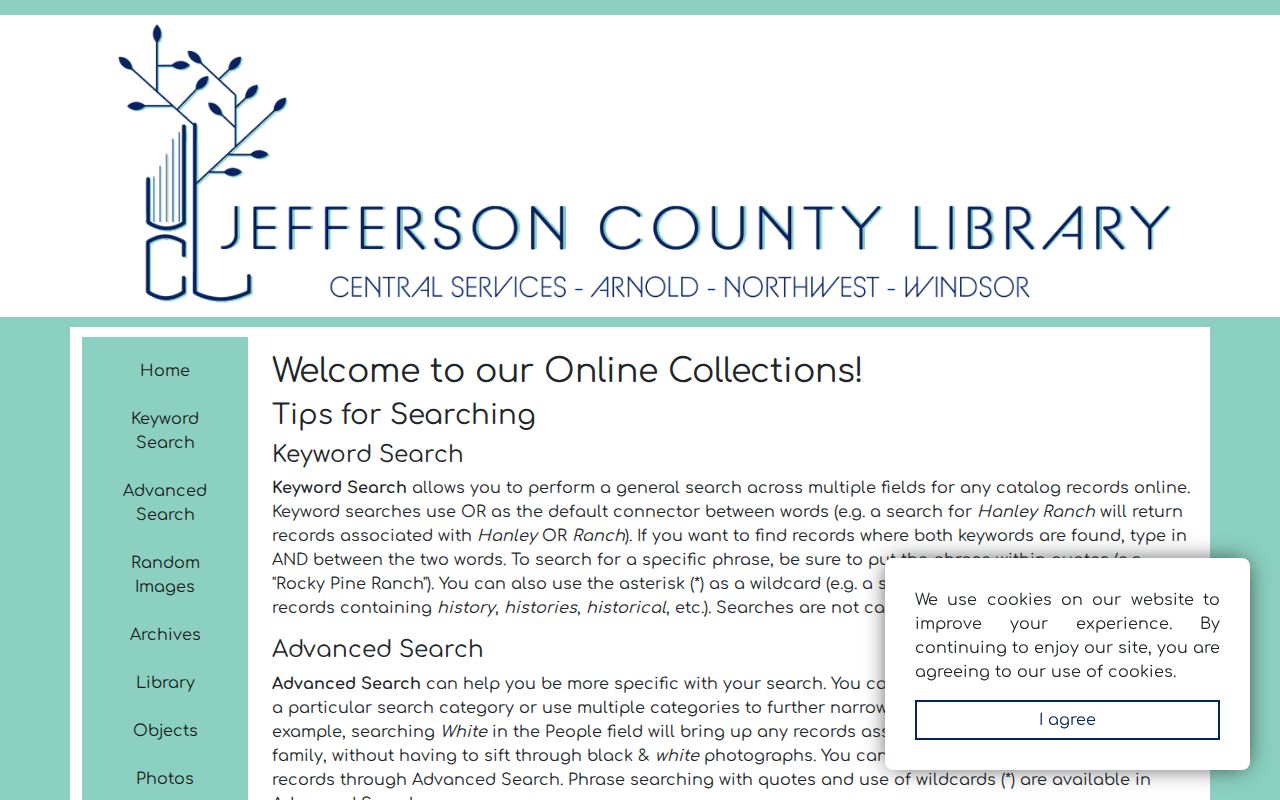
Catalog searching expands the search beyond an exact directory title. The JCL local archive catalog supports keyword and advanced searching, with People, Photos, Objects, Library, and Archives modes. Search Arnold along with Beck, Flamm City, Maxville, Old Town Arnold, Ten Brook, and Wickes. Search by a surname, street, church, or nearby community too. A catalog description can point to a photograph, clipping, interview, or local-history file even when no digitized image is visible.
The JCL local archive catalog is the source for the searchable collection modes.
The State Historical Society of Missouri's Jefferson County collections include establishment papers, local newspapers, land-sale, court, business, family, and church material. Research-center appointments are encouraged. The Missouri State Archives county and municipal browser can be useful for a series search, but it is organized by county, office type, record type, content keyword, city, and year range rather than a person-name search.
Arnold Historical Records at Society
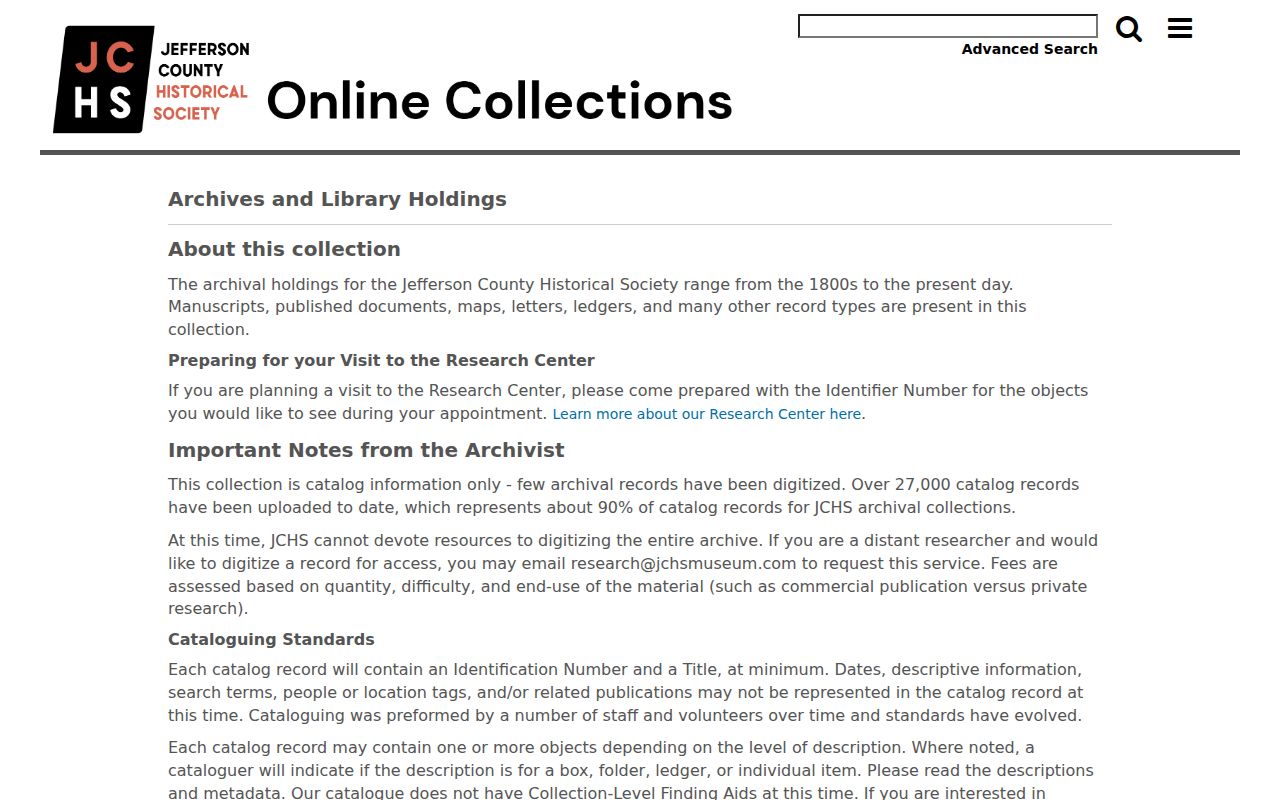
The Jefferson County Historical Society catalog reports more than 27,000 descriptions, representing about 90 percent of its archival catalog. Its holdings reach from the 1800s to the present, though only a small portion is digitized. A catalog record is evidence that a collection has been described, not confirmation that every item can be read online. Distant researchers may request digitization by writing to research@jchsmuseum.com, while an appointment remains the better route for broader archival work.
The Jefferson County Historical Society catalog shows the archive's descriptive records.
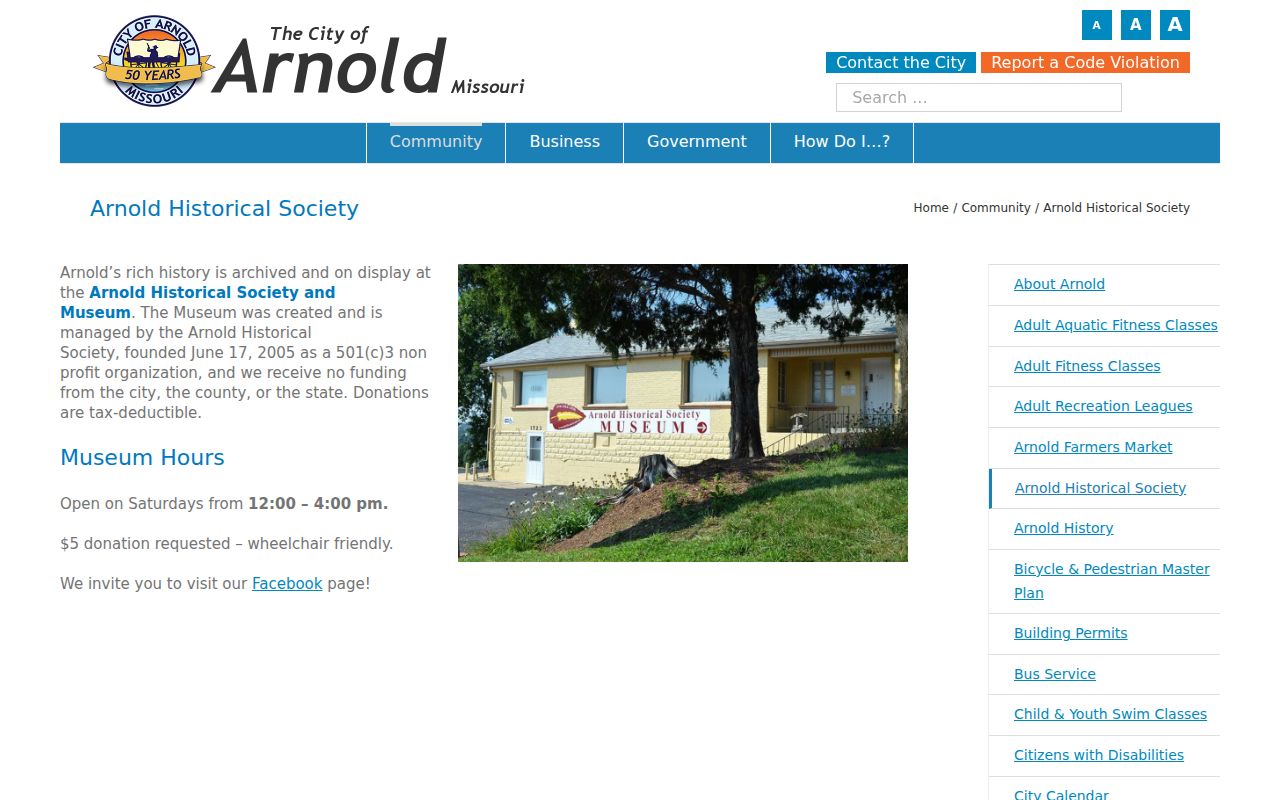
Arnold also has a local museum at 1723 Jeffco Blvd. The Arnold Historical Society and Museum was founded by volunteers in 2005, is not government funded, and is open Saturdays from noon to 4:00 p.m.; a $5 donation is requested. It is a physical local-history and artifact resource, not an online directory.
The City of Arnold's Historical Society page provides the museum's public details.
Ask about photographs, family donations, historic-property material, and the book Historic Arnold. These items can add place and family context to a directory search without being mistaken for a complete list of residents.
Old Arnold Names in Printed Directories
Arnold incorporated on September 14, 1972. Earlier households may be described through Jefferson County, a township, an older settlement, or a nearby postal place instead of the modern city name. Official city history identifies Beck, Flamm City, Maxville, Old Town Arnold, Ten Brook, and Wickes among the area's earlier settlements. A search for a 1910 or 1940 household should test those names as well as Arnold, especially in newspapers, church material, cemetery registers, land records, and catalog descriptions.
The incorporation date also marks a records split. City Clerk material begins as municipal records after incorporation, while earlier personal and property references may live in county, church, cemetery, newspaper, or township collections. Jefferson County's early record history includes fires that left some township boundaries disputed. That history is a reason to compare sources, not a reason to assume every record disappeared. Note: The modern Recorder index reaching back to 1817 does not prove every historical series survived intact.
Tracing Arnold Household Records
Once a local directory or comparable name-and-address source has been found, trace the household one year at a time. Record each spelling, address, occupation, spouse reference, and abbreviation exactly as printed. Then search the surname and street in the next available year and the prior available year. Pair an address change with the closest public federal census, currently available through 1950, to test whether the same household, a relative, or an unrelated person appears at that location.
- Start with the earliest confirmed local address, newspaper notice, catalog item, or directory entry.
- Search the same surname and street in nearby available years, noting every move and spelling difference.
- Check a reverse or criss-cross section only when the volume actually contains one.
- Compare the date with the nearest federal census and record household members, ages, and relationships.
- Use deeds, probate, obituary notices, and newspaper articles to explain a disappearance or an address change.
A household can leave a directory because it moved, changed name form, was missed by the compiler, or had a death in the family. The underlying document provides the answer, not the absence of a single listing. A name found in an old Arnold city directory may be a useful starting point for a modern confirmation through official records, but it should never be treated as current proof by itself.
Arnold Directory Record Gaps
Keep a short timeline beside the research notes. Jefferson County was organized in 1818, its early boundaries changed several times, and historical records at the county seat and in Jefferson City were destroyed by fire. Arnold became a municipality in 1972. The Recorder's online routes have separate cutoffs: Laredo begins in April 1985, while the COTT historical route reaches from March 1985 back to 1817. These milestones explain why a person or property may be easier to find in one keeper's collection than another.
- 1818: Jefferson County was organized, beginning the county records context for early local research.
- Before 1972: Search the county and the older settlement names when Arnold is missing from an index.
- September 14, 1972: Arnold incorporated, creating a later municipal-record layer.
- March and April 1985: The Recorder's vendor-specific online coverage changes by service.
For records that are not online, use the holding library, archive, or custodian rather than guessing at a coverage year. The missing verified Arnold directory run, sample entry, reverse-directory sequence, and telephone-book shelf remain research gaps that require onsite inspection or staff confirmation.